Two of Wands
The Two of Wands: from Marseille paired batons to the Rider-Waite-Smith figure at the battlements holding the world in his hand — dominion, planning, and the threshold of action.
Etymology & Name
The suit derives from the Italian 'Bastoni' (clubs, staves) and the French 'Bâtons' (batons). Numbered small cards were not given individual names in the playing-card tradition — they were simply 'Due di Bastoni' (two of batons) and so on. Their meanings emerged only after Etteilla and the French occultists began assigning divinatory significance to each numbered card in the late eighteenth century.
Early Imagery
In the Marseille tradition the Two of Batons showed two crossed or paired batons, often with leafy ornament between them, held by small hands or arranged symmetrically around the card's central axis. The composition was purely decorative — there was no figure, no scene, no narrative. The arrangement itself was the entire image, and any meaning was derived from the number two combined with the suit of fire.
Rider-Waite-Smith Design
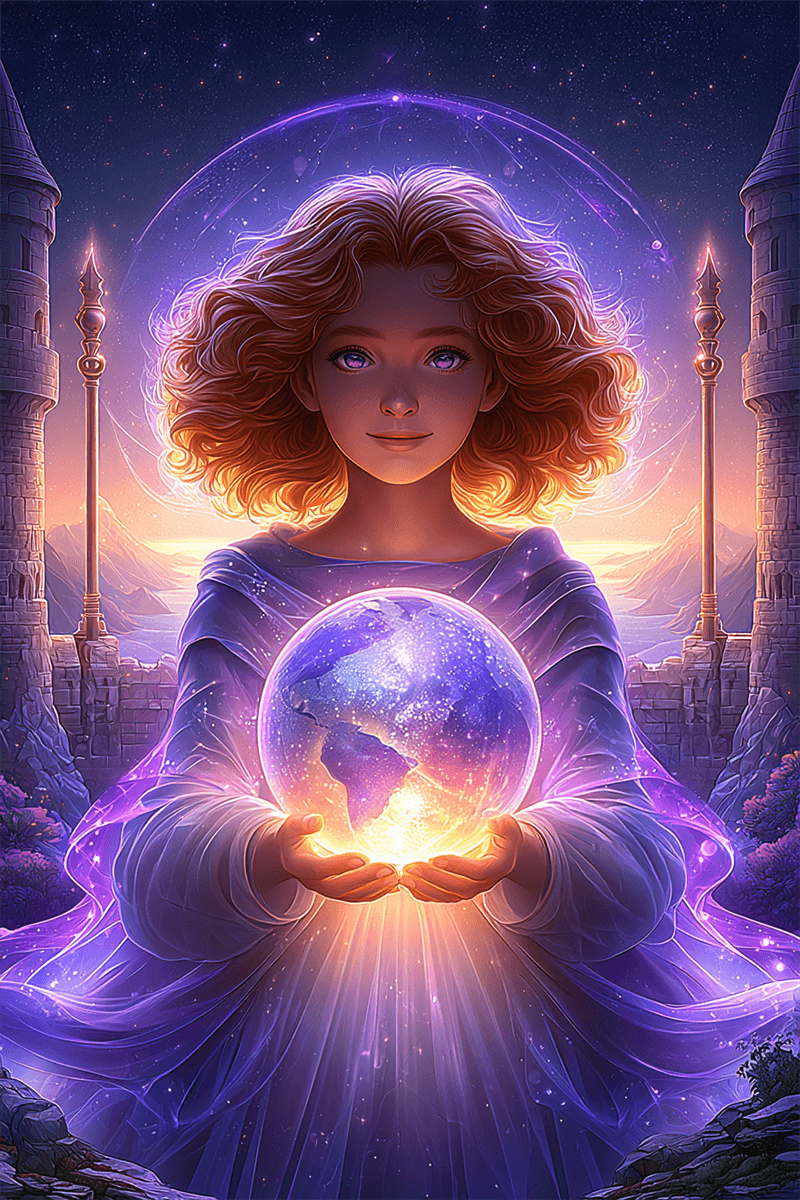
Pamela Colman Smith placed a richly dressed nobleman on a battlemented terrace, holding a small globe in his right hand while a wand is fixed in a bracket at his side and a second wand rises behind him. To his left stretches a hilly landscape with water, distant buildings, and a yellow sky. The figure looks outward over his domain, contemplating what lies beyond.
Key Symbolism
The two wands anchored in place suggest a choice of direction; the globe in the figure's hand is dominion over the known world, while the distant horizon implies the unknown still to be claimed. The battlement marks the boundary between the safe interior and the wider world. The card holds the moment of planning before commitment — the moment when the seed of the Ace must choose how to grow.
Across Traditions
The Marseille Two is purely a paired arrangement of suit symbols with no narrative content. Waite and Smith's scene transformed it into the figure of a man considering his dominion, and Waite named it 'Dominion' in the Pictorial Key. In the Thoth deck Crowley titles the card 'Dominion' as well, attributes it to Mars in Aries, and renders two diamond-headed Dorjes crossed against a flaming background suggesting active, even aggressive, force.
Cultural Context
The Golden Dawn assigned the Two of Wands to Mars in Aries, the first decan of the zodiac — the cardinal fire that initiates. The image of a figure on a battlement looking over the world recalls Renaissance portraits of merchants and explorers at the threshold of empire. As the second card of the suit it captures the moment when an initial spark of will encounters the need for strategy, range, and the willingness to choose one path over another.