Five of Pentacles
Discover the history and symbolism of the Five of Pentacles tarot card, from the Marseille pip to the Rider-Waite-Smith beggars outside a church window.
Etymology & Name
The number five in tarot signifies conflict, change, and disruption. The Five of Pentacles combines the instability of five with the material hardship of coins. The card is assigned to the first decan of Taurus (0-10 degrees), ruled by Mercury, combining the earthiness of Taurus with the restlessness of Mercury.
Early Imagery
In the Marseille tradition the Five of Pentacles showed five coins in an arrangement that often suggested scattering or loss. The geometric design conveyed the disruption of material security.
Rider-Waite-Smith Design
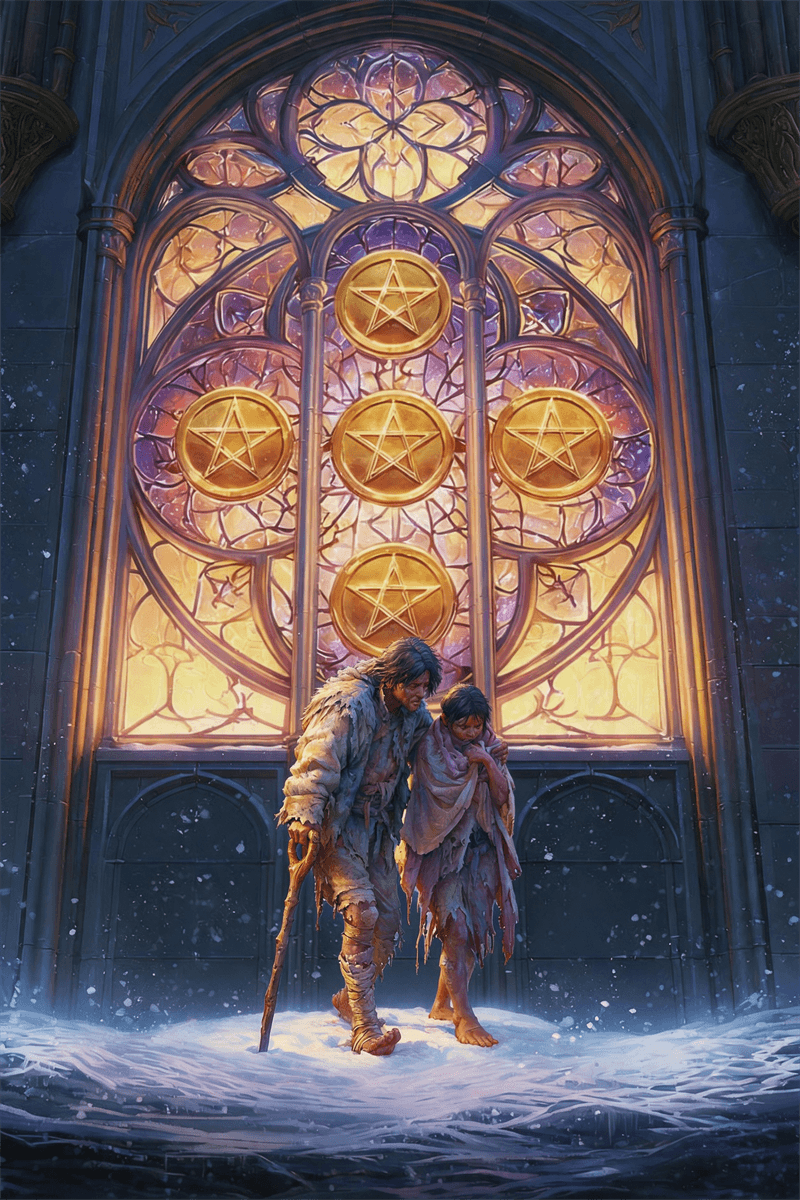
Pamela Colman Smith 1909 illustration depicts two beggars stumbling through the snow past a stained glass window. The window shows a pentacle glowing with warm light, but the figures cannot enter. One figure is on crutches, the other wrapped in a shawl. The image is one of material and spiritual destitution: help is visible but unreachable.
Key Symbolism
The Five of Pentacles represents material hardship, exclusion, and the crisis of need. The beggars are the vulnerable self in winter. The church window is the help that seems unavailable. The snow is the cold of a world without shelter. But the window is lit, suggesting that the resources exist: the barrier is one of access, not abundance. The card asks: what is keeping you from the help that is available?
Across Traditions
The Marseille tradition shows five coins in a geometric pattern. The RWS design introduced the beggars and the church window, drawing on the medieval tradition of almsgiving and the sin of failing to help the poor. In the Thoth Tarot Crowley titled the card "Worry" and depicted five disks in a disrupted pattern, emphasizing the anxiety of material uncertainty. Crowley assigned it to Mercury in Taurus.
Cultural Context
The Five of Pentacles is assigned to Mercury in Taurus. Robert Place notes that the beggars draw on the medieval tradition of the poor at the church door, a common scene in winter. The card also reflects the spiritual dimension of poverty: the window is lit but the door is closed. In the context of the suit, this card represents the material realm at its most challenging: the experience of need that tests both faith and resourcefulness.