Six of Cups
Learn about the history and symbolism of the Six of Cups tarot card, from Marseille origins to the Rider-Waite-Smith nostalgic scene and Thoth tradition.
Etymology & Name
The card name follows the standard numerical convention: "Sei di Coppe" in Italian and "Six de Coupes" in French, deriving from the Latin "sex." In the Golden Dawn system, the Six of Cups was assigned to the second decan of Scorpio, ruled by the Sun, giving it the Qabalistic title "Lord of Pleasure." The number six represents harmony, balance, and integration, the hexagram and the Qabalistic sixth sphere of Tiphareth (beauty, harmony, the balanced center). The Sun in Scorpio combines the planet of vitality and joy with the intense, transformative water sign.
Early Imagery
In the Marseille tradition, the Six of Cups displayed six cup-shaped vessels arranged in a symmetrical pattern. The Noblet deck (c. 1650) and Dodal deck (c. 1701) showed six cups in a balanced, often hexagonal or two-row pattern. No human figures or narrative scenes were depicted. The abstract design conveyed meaning through the number six associations with harmony and balance.
Rider-Waite-Smith Design
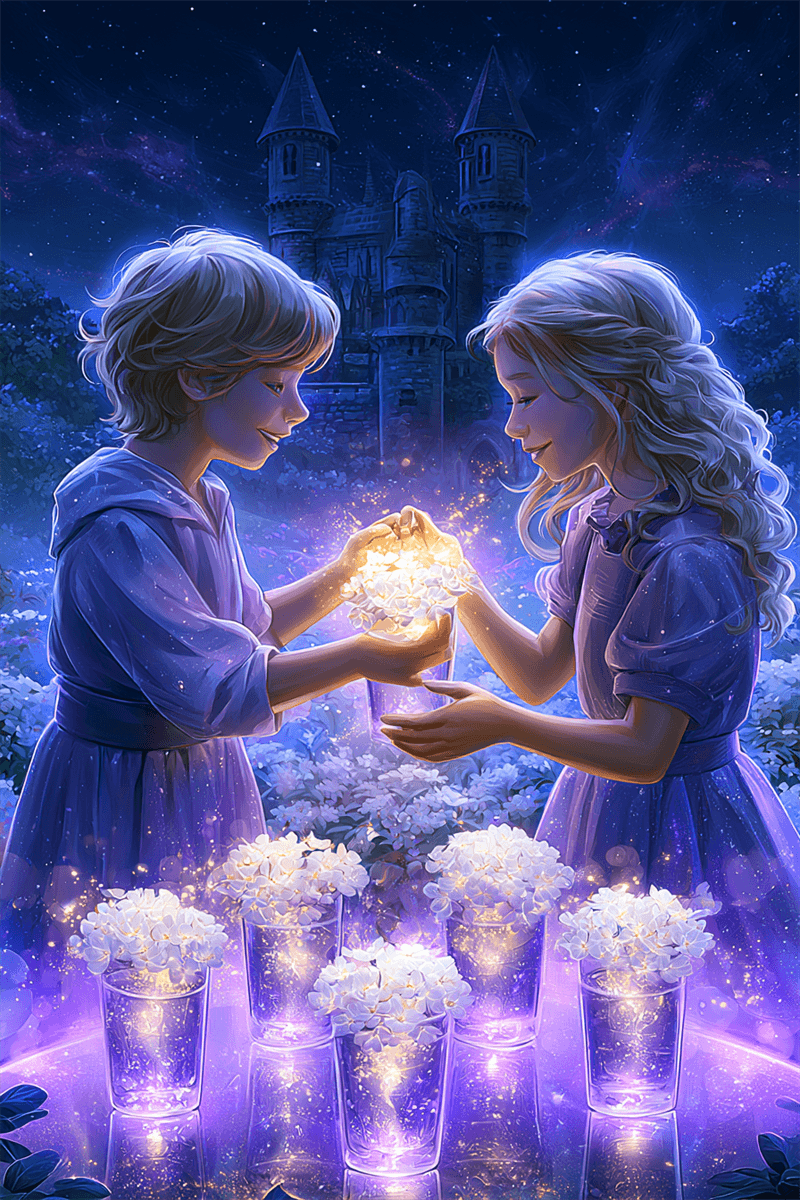
Pamela Colman Smith 1909 illustration creates a nostalgic, dreamlike scene of childhood innocence. Two children, an older child offering a cup filled with flowers to a younger one, stand in a walled garden. Five more cups, each containing flowers, are arranged around them. The walled garden evokes the hortus conclusus of medieval art, a symbol of the Virgin Mary purity and of Paradise itself. Arthur Edward Waite described the card as representing "a card of the past" and "memories." The act of giving between the children represents the transmission of memory, tradition, and affection between generations.
Key Symbolism
The Six of Cups is layered with nostalgic and symbolic meaning. The children represent innocence and the uncorrupted emotions of childhood. The flower-filled cups symbolize the beauty and fragility of early memories. The walled garden represents a protected, enclosed space of innocence. Place notes that the number six, associated with Tiphareth (beauty) on the Qabalistic Tree of Life, reinforces the card theme of harmonious, beautiful remembrance. The flowers symbolize purity, hope, and the lasting quality of genuine affection.
Across Traditions
The Marseille tradition presents six chalices in a symmetrical, balanced pattern with no figures. Pamela Colman Smith 1909 RWS design transformed this into the iconic scene of children exchanging flower-filled cups. The Thoth Tarot depicts six lotus-cups arranged in a hexagonal pattern with water flowing abundantly. Crowley titled the card "Pleasure" and assigned it to the Sun in Scorpio, emphasizing the warming, vitalizing influence of the Sun on deep emotional waters.
Cultural Context
The Six of Cups is assigned to the second decan of Scorpio (10-20 degrees), ruled by the Sun. Helen Farley notes that the theme of nostalgia and childhood memory was particularly resonant in the late Victorian and Edwardian eras, when rapid industrialization created a widespread longing for the perceived simplicity of rural and childhood life. This cultural current is reflected in the works of Kenneth Grahame and J.M. Barrie, contemporaries of Smith and Waite.