Six of Pentacles
Discover the history and symbolism of the Six of Pentacles tarot card, from the Marseille pip to the Rider-Waite-Smith merchant weighing coins for the poor.
Etymology & Name
The number six in tarot signifies harmony, balance, and exchange. The Six of Pentacles combines the equilibrium of six with the generosity of coins. The card is assigned to the second decan of Taurus (10-20 degrees), ruled by the Moon, combining the earthiness of Taurus with the receptivity of the Moon.
Early Imagery
In the Marseille tradition the Six of Pentacles showed six coins in a balanced arrangement, often suggesting the flow of resources between giver and receiver. The geometric design conveyed the circulation of wealth.
Rider-Waite-Smith Design
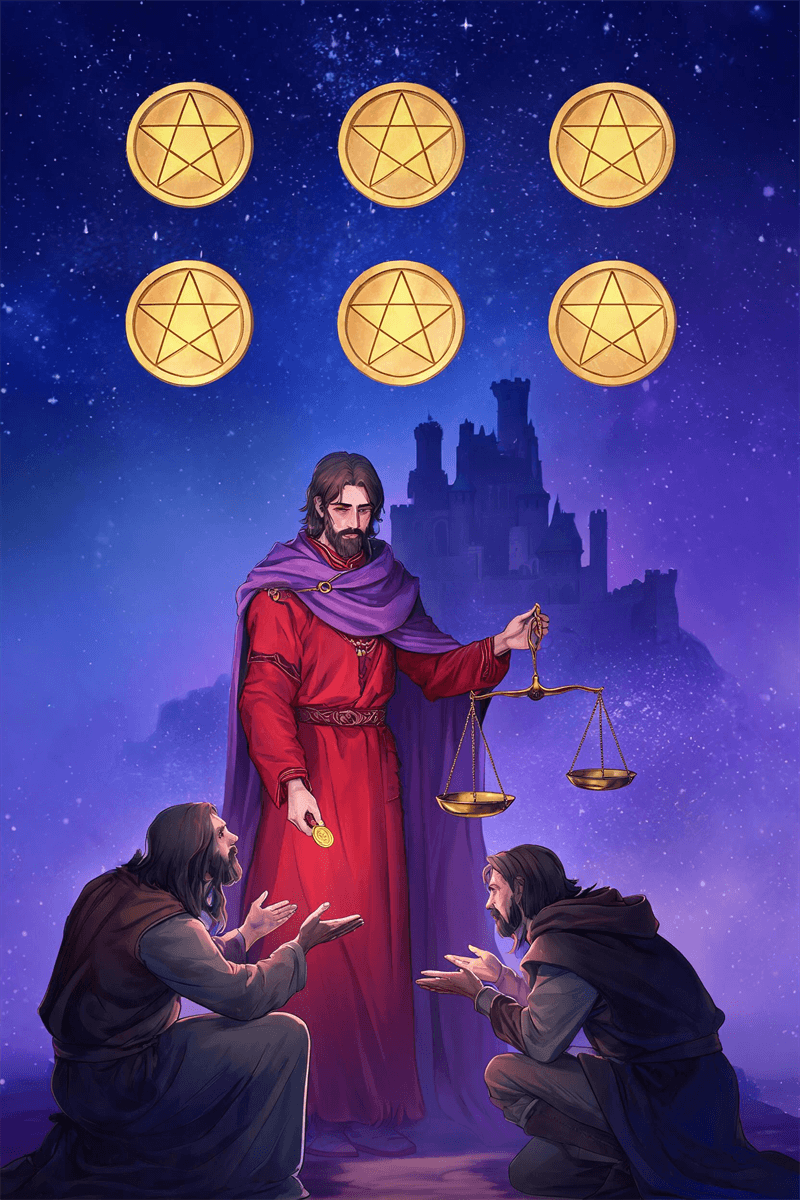
Pamela Colman Smith 1909 illustration depicts a wealthy merchant holding a scale, weighing coins for two beggars who kneel before him. The merchant is well-dressed, and his scale is the instrument of fair distribution. The image is one of generosity balanced by justice: the giver gives what is due, not more, not less. The card represents the proper circulation of material resources.
Key Symbolism
The Six of Pentacles represents generosity, fair exchange, and the balance of giving and receiving. The merchant with the scale is the principle of justice in material matters. The two beggars are the recipients, and the scale ensures that the gift is appropriate. The card asks: are you giving and receiving in balance? True generosity respects both the giver and the receiver.
Across Traditions
The Marseille tradition shows six coins in a geometric pattern. The RWS design introduced the merchant and the scale, drawing on the medieval tradition of almsgiving and the corporal works of mercy. In the Thoth Tarot Crowley titled the card "Success" and depicted six disks in a balanced arrangement, emphasizing the material achievement that comes from right exchange. Crowley assigned it to the Moon in Taurus.
Cultural Context
The Six of Pentacles is assigned to the Moon in Taurus. Helen Farley notes that the merchant with the scale draws on the medieval tradition of the just weight, a biblical concept of fair commerce. The card also reflects the social contract of mutual aid. In the context of the suit, this card represents the material realm at its most balanced: the flow of resources that sustains both giver and receiver.