Seven of Cups
Explore the history and symbolism of the Seven of Cups tarot card, from Marseille origins to the Rider-Waite-Smith illusion scene and Thoth tradition of debauch.
Etymology & Name
The card name follows the standard numerical convention: "Sette di Coppe" in Italian and "Sept de Coupes" in French, deriving from the Latin "septem." In the Golden Dawn system, the Seven of Cups was assigned to the third decan of Scorpio, ruled by Venus, giving it the Qabalistic title "Lord of Illusionary Success," which Crowley renamed "Debauch" in the Thoth Tarot. The number seven represents mystery, spirituality, and the search for deeper meaning. In the Qabalistic Tree of Life, the seventh sphere is Netzach, the sphere of victory, emotion, and the raw forces of nature.
Early Imagery
In the Marseille tradition, the Seven of Cups displayed seven cup-shaped vessels arranged in a symmetrical pattern. The Noblet deck and Dodal deck showed seven cups in a balanced arrangement. No human figures or narrative scenes were depicted. The abstract design relied on the number seven associations with mystery and spirituality combined with the suit emotional domain.
Rider-Waite-Smith Design
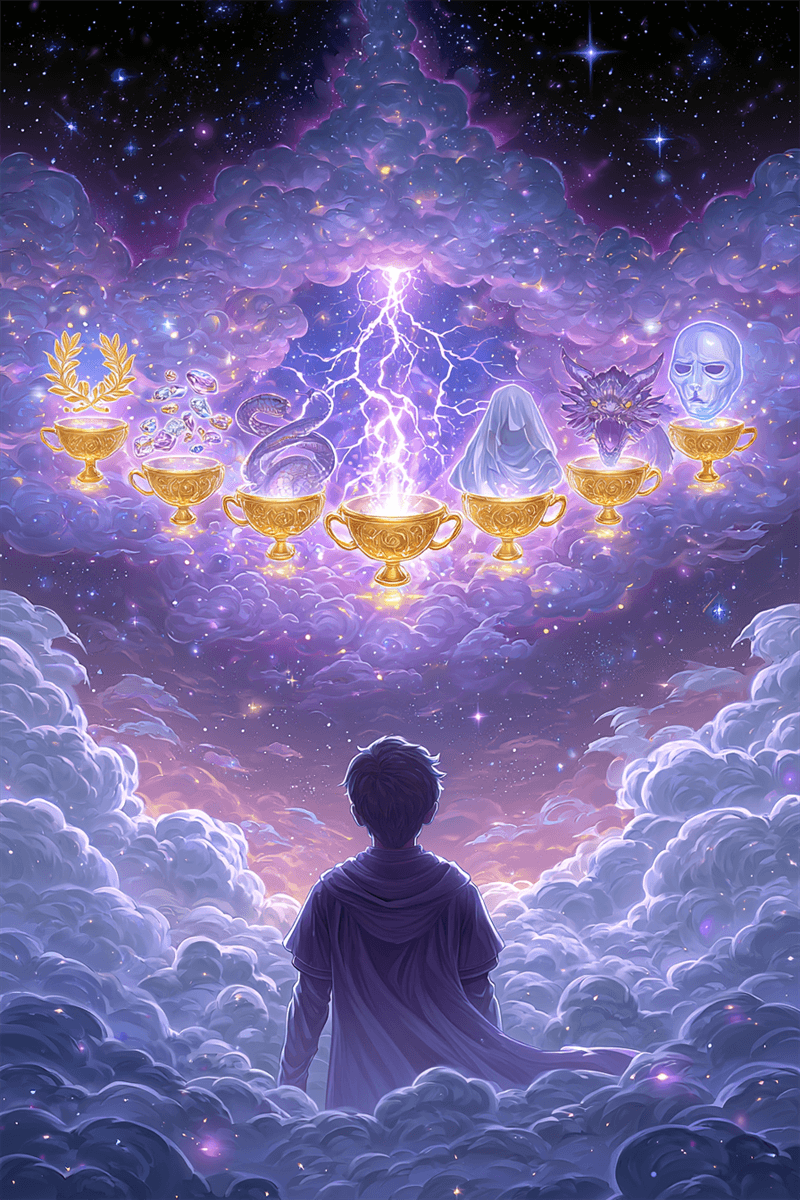
Pamela Colman Smith 1909 illustration creates a surreal, dreamlike tableau of temptation and illusion. Seven cups, each containing a different phantasmal image, float or are arranged in the air before a dark, shadowy figure. The images within the cups include: a human head or face, a veiled or shrouded figure, a serpent, a castle or tower, a heap of jewels or treasure, a laurel wreath, and a dragon or monster. The shadowy figure appears to contemplate these options with a mixture of wonder and confusion. Arthur Edward Waite described the card as representing "fairy favours," "imagination," and the images as "reflecting the visions of the person in question."
Key Symbolism
The Seven of Cups is one of the most symbolically dense cards in the minor arcana. Each cup contains a different image representing a different form of desire or temptation. The human head symbolizes intellectual vanity. The veiled figure represents mystery and the allure of the hidden. The serpent represents temptation and wisdom. The castle represents ambition and power. The jewels symbolize material wealth and greed. The laurel wreath represents victory and the desire for glory. The dragon represents primal power and the dangers within unexamined desires. Place notes that the shadowy figure represents the psyche confronted with its own projections.
Across Traditions
The Marseille tradition presents seven chalices in a symmetrical pattern with no figures. Pamela Colman Smith 1909 RWS design introduced the surreal tableau of floating cups with phantasmal images. The Thoth Tarot depicts seven lotus-cups with a toxic, greenish substance overflowing from the vessels. Crowley titled the card "Debauch" and assigned it to Venus in Scorpio, emphasizing the corrosive, intoxicating quality of uncontrolled desire. The greenish water suggests poison and the toxic consequences of excess.
Cultural Context
The Seven of Cups is assigned to the third decan of Scorpio (20-30 degrees), ruled by Venus. Helen Farley notes that the theme of temptation and illusion has deep roots in Western religious traditions, from the Garden of Eden forbidden fruit to medieval morality plays. The seven images within the cups have been linked to the seven deadly sins. The surreal quality of Smith illustration resonates with the Symbolist art movement of the late 19th century.