Eight of Swords
Discover the history and symbolism of the Eight of Swords tarot card, from the Marseille pip to the Rider-Waite-Smith blindfolded woman surrounded by swords.
Etymology & Name
The number eight in tarot signifies restriction and the cycle of cause and effect. The Eight of Swords combines the binding of eight with the mental trap of swords. The card is assigned to the first decan of Gemini (0-10 degrees), ruled by Jupiter, combining the duality of Gemini with the expansion of Jupiter.
Early Imagery
In the Marseille tradition the Eight of Swords showed eight swords arranged in a pattern, often enclosing a space. The arrangement suggested confinement or enclosure without a human figure to embody the experience.
Rider-Waite-Smith Design
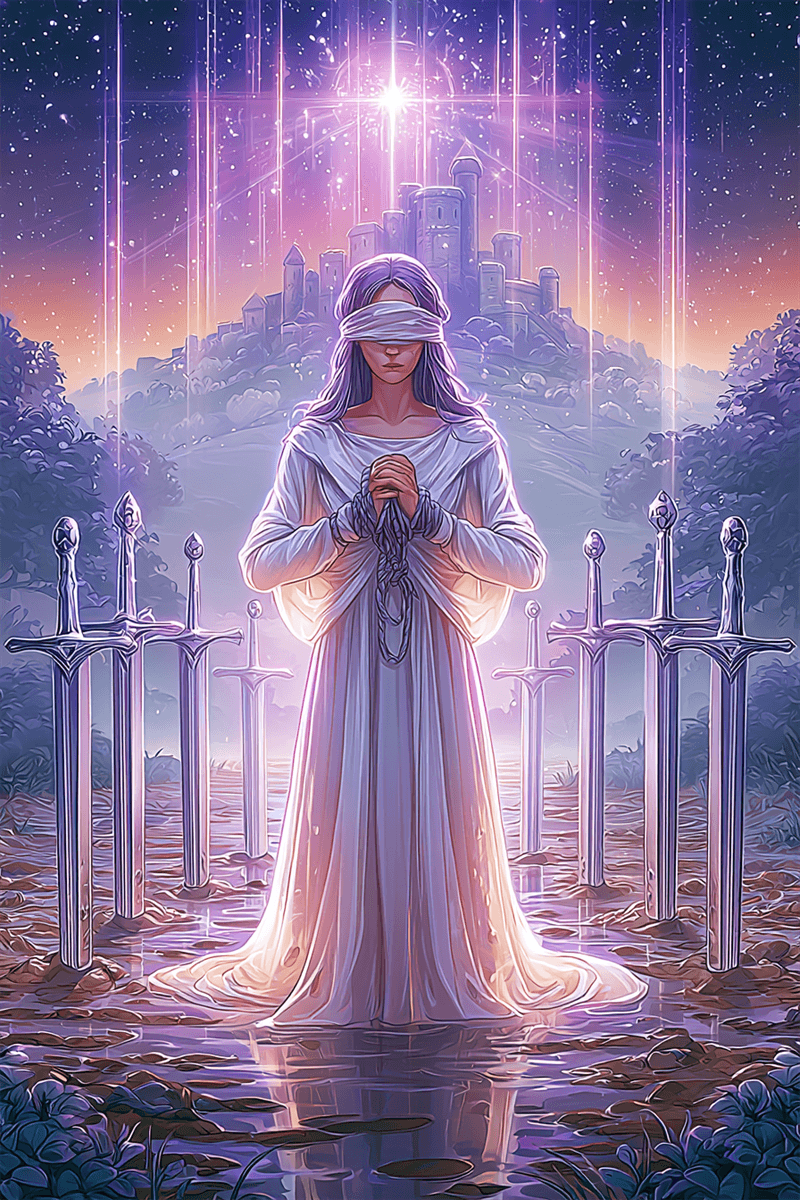
Pamela Colman Smith 1909 illustration depicts a blindfolded woman bound with ropes, standing in a field of stakes surrounded by eight swords. A body of water and a castle are visible in the distance. The woman appears trapped, but the ropes are loose and the path to freedom is open if she could only see it. The image is one of self-imposed imprisonment.
Key Symbolism
The Eight of Swords represents the mental prison, the trap created by one own thoughts. The blindfold is the inability to see options, and the ropes are the self-imposed limitations. The eight swords form a cage of the mind. But the water and castle in the distance suggest that freedom is available if the mind can be stilled. The card asks: what story are you telling yourself that keeps you trapped?
Across Traditions
The Marseille tradition shows eight swords in a geometric pattern. The RWS design introduced the bound woman, drawing on the imagery of Andromeda and the broader trope of the maiden in distress. In the Thoth Tarot Crowley titled the card "Interference" and depicted eight swords crossed in a chaotic pattern, suggesting the mind that defeats itself. Crowley assigned it to Jupiter in Gemini, the overthinking that paralyzes.
Cultural Context
The Eight of Swords is assigned to Jupiter in Gemini. Robert Place notes that the image of the bound woman draws on the myth of Andromeda and the broader tradition of the captive maiden. The card also reflects the psychological insight that most prisons are mental. In the context of the suit, this card represents the intellect turned against itself, the overthinking that creates the cage it then cannot escape.