Nine of Pentacles
Discover the history and symbolism of the Nine of Pentacles tarot card, from the Marseille pip to the Rider-Waite-Smith woman in her vineyard.
Etymology & Name
The number nine in tarot signifies completion and the approach of fulfillment. The Nine of Pentacles combines the finality of nine with the abundance of coins. The card is assigned to the second decan of Virgo (10-20 degrees), ruled by Venus, combining the precision of Virgo with the beauty of Venus.
Early Imagery
In the Marseille tradition the Nine of Pentacles showed nine coins in an arrangement that often suggested a garden or orchard. The geometric design conveyed the fruition of patient cultivation.
Rider-Waite-Smith Design
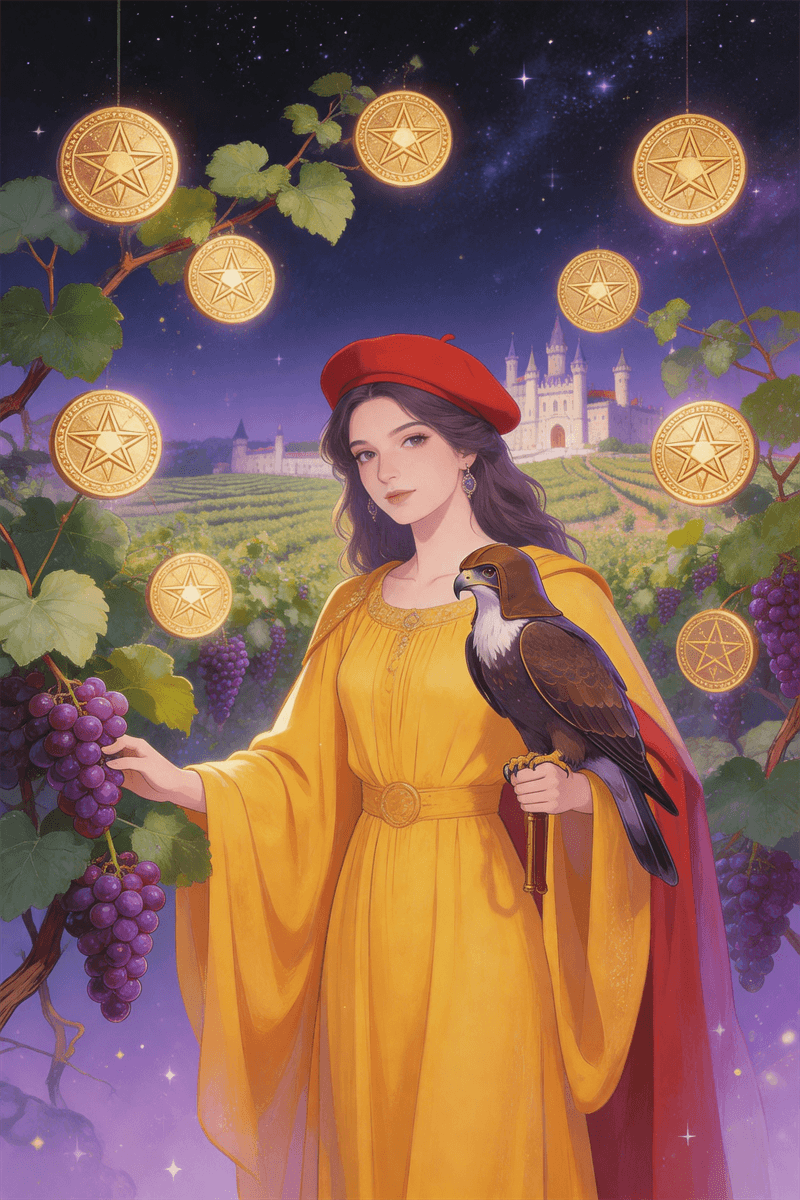
Pamela Colman Smith 1909 illustration depicts a woman standing alone in a vineyard. She wears a luxurious gown, and a falcon perches on her gloved hand. Nine pentacles are arranged on the vines around her. A snail moves along the ground. The image is one of self-sufficient abundance: the woman has cultivated her garden and now enjoys its fruits in solitude.
Key Symbolism
The Nine of Pentacles represents self-sufficiency, cultivated abundance, and the enjoyment of one own achievements. The woman in the vineyard is the self that has tended its garden and now reaps the harvest. The falcon is the disciplined wildness that serves its mistress. The snail is the slow patience that built this abundance. The card asks: can you enjoy what you have created, alone and complete?
Across Traditions
The Marseille tradition shows nine coins in a geometric pattern. The RWS design introduced the woman in the vineyard, drawing on the Renaissance tradition of the cultivated gentlewoman. In the Thoth Tarot Crowley titled the card "Gain" and depicted nine disks in a fertile arrangement, emphasizing the material success that comes from right effort. Crowley assigned it to Venus in Virgo.
Cultural Context
The Nine of Pentacles is assigned to Venus in Virgo. Robert Place notes that the woman in the vineyard draws on the Renaissance ideal of the cultivated gentlewoman, a figure of both beauty and competence. The falcon suggests the aristocratic sport of hawking. In the context of the suit, this card represents the material realm at its most fulfilled: the enjoyment of abundance that has been earned through patient cultivation.