Knight of Pentacles
Discover the history and symbolism of the Knight of Pentacles tarot card, from the Marseille Cavalier to the Rider-Waite-Smith knight on a plodding workhorse.
Etymology & Name
The Knight was historically called "Cavallo" in Italian and "Cavalier" in French. In the Golden Dawn system, the Knight was assigned the element of Air within the suit, making the Knight of Pentacles the "Air of Earth." The Knight represents the active, driving force of the suit, the most dynamic expression of material energy.
Early Imagery
In the Marseille tradition, the Knight of Pentacles (Cavalier de Deniers) was depicted as a young man on horseback, holding a coin. The Knight was the second-highest court card, representing a provider, worker, or champion of material causes. The horse signified movement and the practical nature of the suit.
Rider-Waite-Smith Design
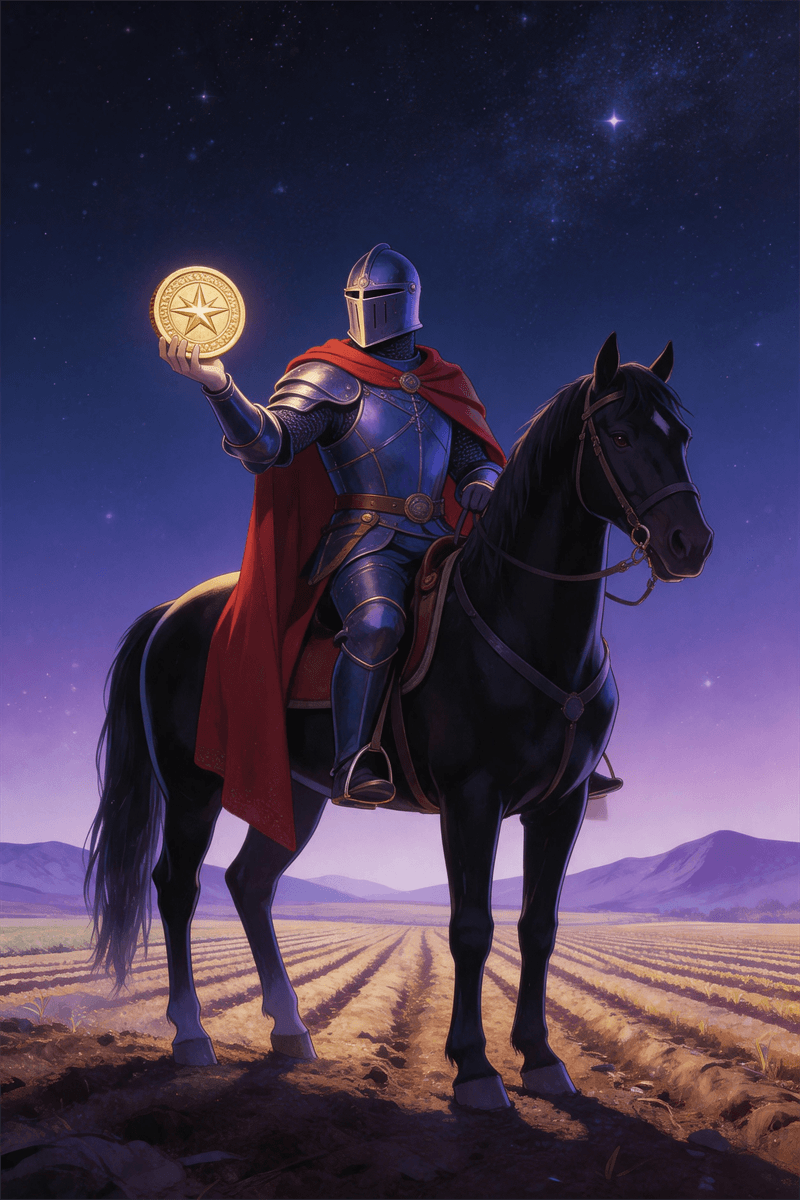
Pamela Colman Smith 1909 illustration depicts a knight on a heavy workhorse, holding a coin. The horse stands still, and the knight is in no hurry. The field is plowed and ready for planting. The image is one of steady, reliable effort: the knight who does not charge but plods, carrying his responsibility with patient persistence. The workhorse is the antithesis of the warhorse.
Key Symbolism
The Knight of Pentacles represents steady effort, reliability, and the commitment to see a task through. The knight on the workhorse is the worker who does not seek glory but gets the job done. The plowed field is the prepared ground, and the coin is the responsibility being carried. As the Air of Earth, this card is material energy at its most persistent: the slow burn of sustained effort.
Across Traditions
The Marseille tradition presents the Knight on horseback with a coin. The RWS design introduced the workhorse and the plowed field, emphasizing the agricultural and practical nature of the suit. In the Thoth Tarot Crowley depicts the "Prince of Disks" as a figure in armor on a heavy horse, holding a disk, representing the airy aspect of Earth. Crowley associated the Prince with the zodiac sign Capricorn.
Cultural Context
The Knight of Pentacles represents the "Air of Earth" in the Golden Dawn system. Helen Farley notes that the knight on the workhorse draws on the agricultural tradition of the patient farmer, a figure of reliability rather than heroism. The card also reflects the dignity of labor and the value of consistency. In the context of the suit, this card represents the material realm at its most dependable: the effort that does not seek reward but earns it.